
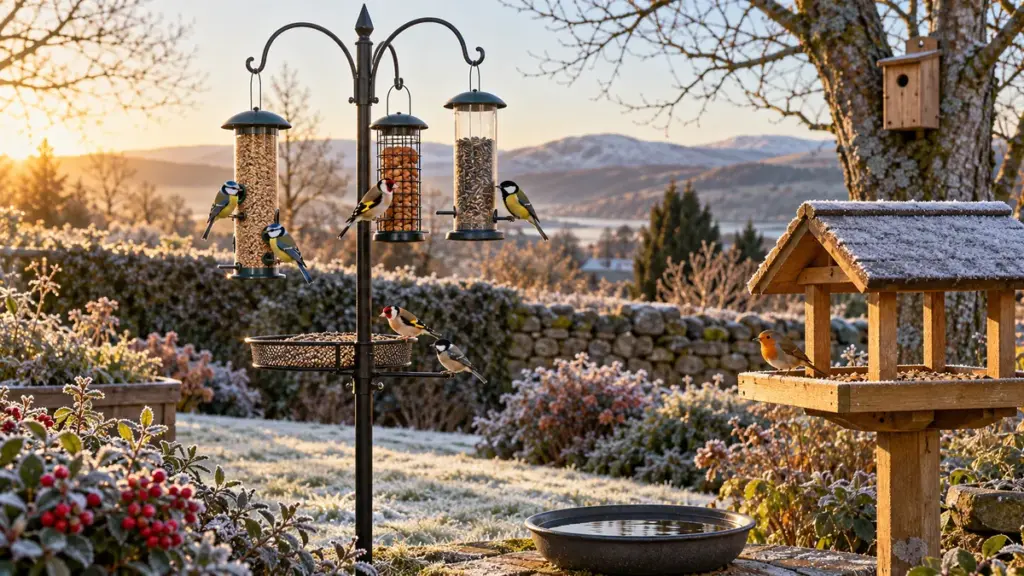
When the days shorten and the frost arrives, garden birds need all the help they can get. A blue tit can burn through much of its body fat just getting through a long, cold Scottish night. A full feeder, a dish of clean water and somewhere sheltered to roost can make the difference between a bird surviving the winter or not.
This guide covers what to feed garden birds in winter, the best feeders, how to keep them clean and safe, and where to buy bird food near you. Our Home Hardware stores across Scotland and the North East stock bird food, feeders and nest boxes, so you can pick everything up locally or order online for Click & Collect.
Quick Answer: How to Help Garden Birds in Winter
- Feed high-energy food: sunflower hearts, fat balls, suet and peanuts.
- Feed little and often, and keep it up once you start. Birds learn to rely on your garden.
- Put out fresh water every day, and keep it from freezing.
- Clean feeders regularly to stop disease spreading.
- Put feeders near cover, but not where cats can hide.
- Put up a nest box or roosting pouch now for winter shelter and spring nesting.
Why Feeding Birds in Winter Matters
Small birds have to eat a lot just to stay alive in winter. Days are short, so there’s little time to feed. Nights are long and cold, so they burn energy just keeping warm. Natural food like insects, seeds and berries runs low just when they need it most, especially in frost and snow.
Garden feeding fills that gap. Research by bird charities has shown that garden feeders genuinely help birds through hard winters, and they bring wildlife right up to your window, which is one of the simple joys of a Scottish winter.
What to Feed Garden Birds in Winter
In winter, birds need food that’s high in fat and energy. Here’s what works best, and what each food attracts. Browse the full bird food and feeders range.
| Food | Birds it attracts | Best served in | Our pick |
|---|---|---|---|
| Sunflower hearts | Goldfinches, greenfinches, tits, robins, siskins | Seed feeder or table | Henry Bell Wild Bird Food Sunflower Hearts 1kg |
| Fat balls and suet | Tits, starlings, sparrows, robins | Fat ball feeder (never in a net) | Henry Bell Fat Balls Tub of 50 |
| Peanuts | Blue tits, great tits, woodpeckers, nuthatches | Mesh peanut feeder only | Henry Bell Wild Bird Food Peanuts 1kg |
| Nyger seed | Goldfinches, siskins | Nyger feeder with small ports | Henry Bell Wild Bird Food Nyger Seed 1.8kg |
| Mealworms | Robins, blackbirds, wrens | Ground tray or table | Henry Bell Mealworm 100g |
| Seed mix | A wide range of small garden birds | Seed feeder or table | Henry Bell Wild Bird Food Superior Seed Mix 1kg |
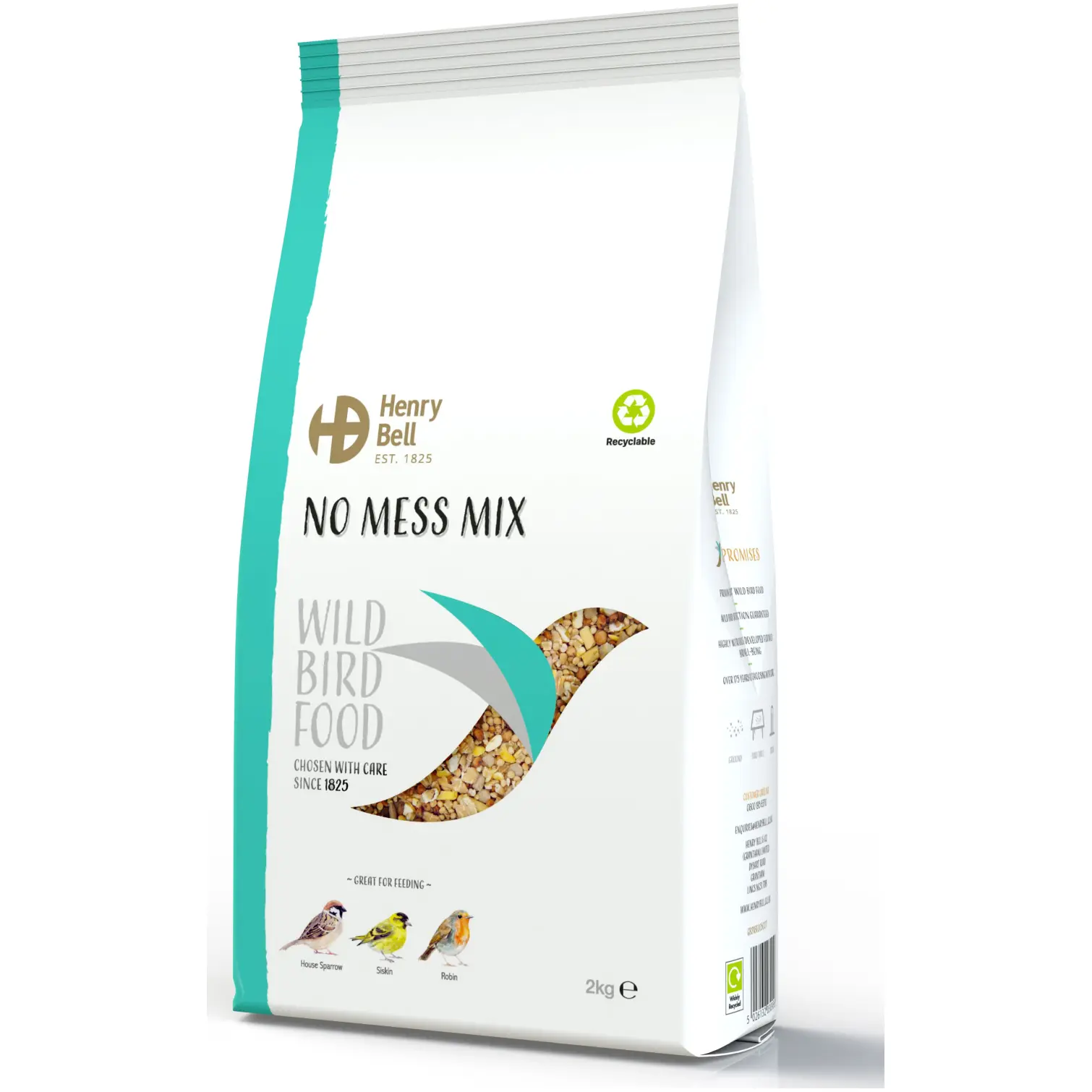
| No-mess mix | Most garden birds, without husks on the lawn | Seed feeder or table | Henry Bell Wild Bird Food No Mess Mix 2kg |
Sunflower Hearts: The Best All-Round Bird Food
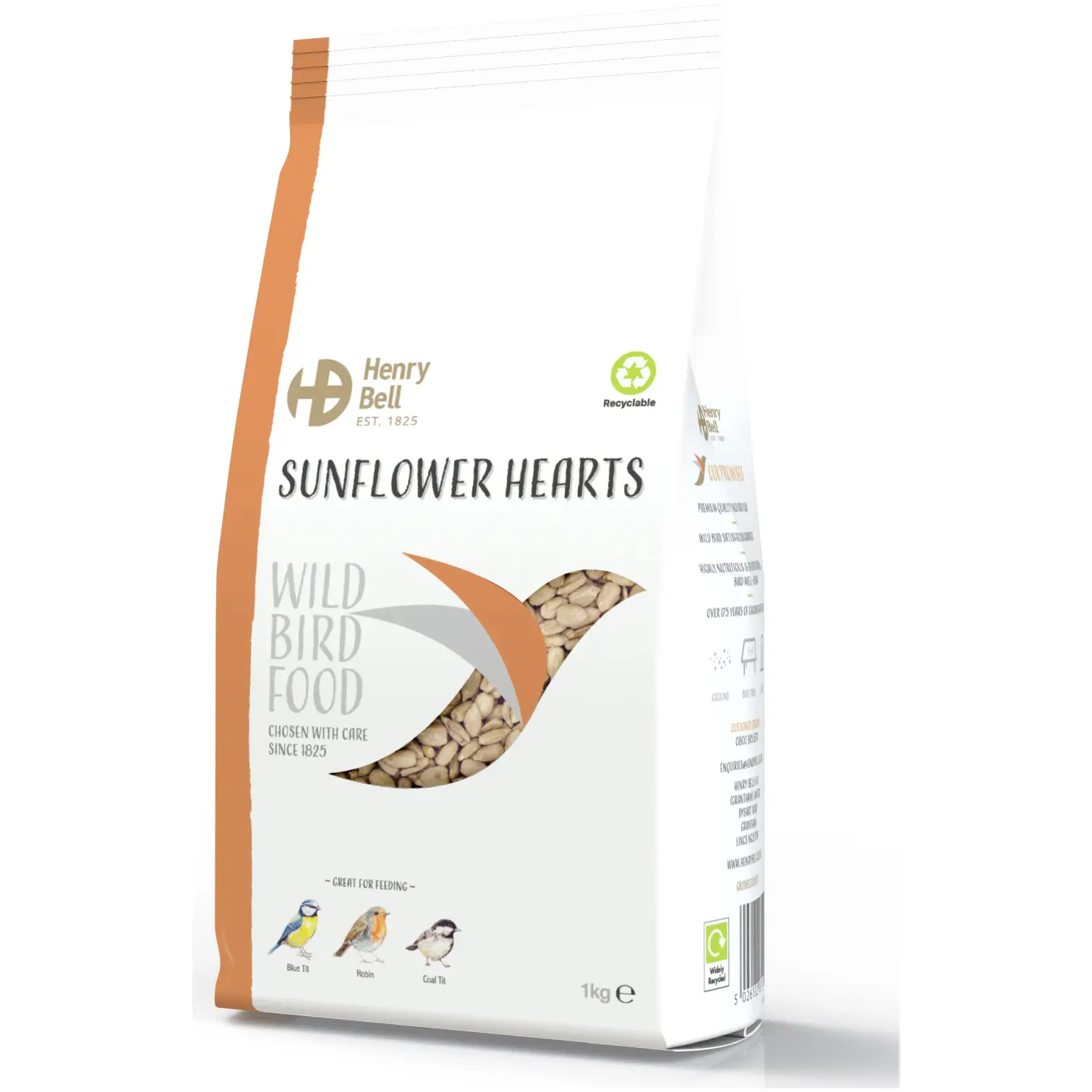
If you only buy one food, make it sunflower hearts. They’re the kernel without the husk, so they’re packed with oil and protein, almost every garden bird eats them, and they leave no mess. Henry Bell Wild Bird Food Sunflower Hearts 1kg is a good size to start with, and it comes in 2kg and 12.55kg bags for regular feeders.
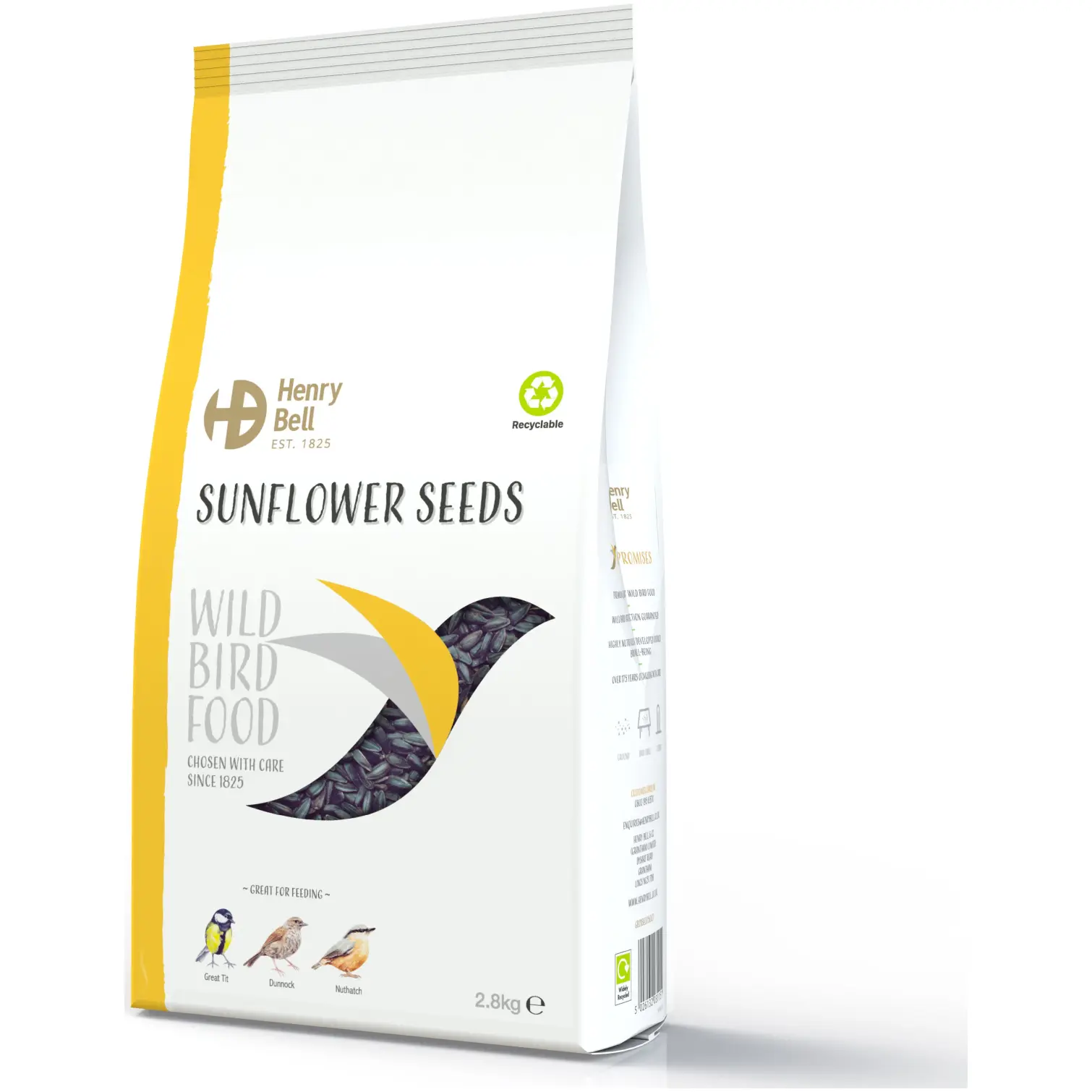
Black sunflower seeds or sunflower hearts? Black sunflower seeds are the whole seed. They have thinner shells than the bigger striped sunflower seeds, so small birds can crack them, and they’re cheaper per kilo than hearts. The trade-off is the husks they leave under the feeder. If you don’t mind sweeping up, black sunflower seeds are great value. If you want a tidy patio, choose hearts.
Fat Balls and Suet: Winter Energy
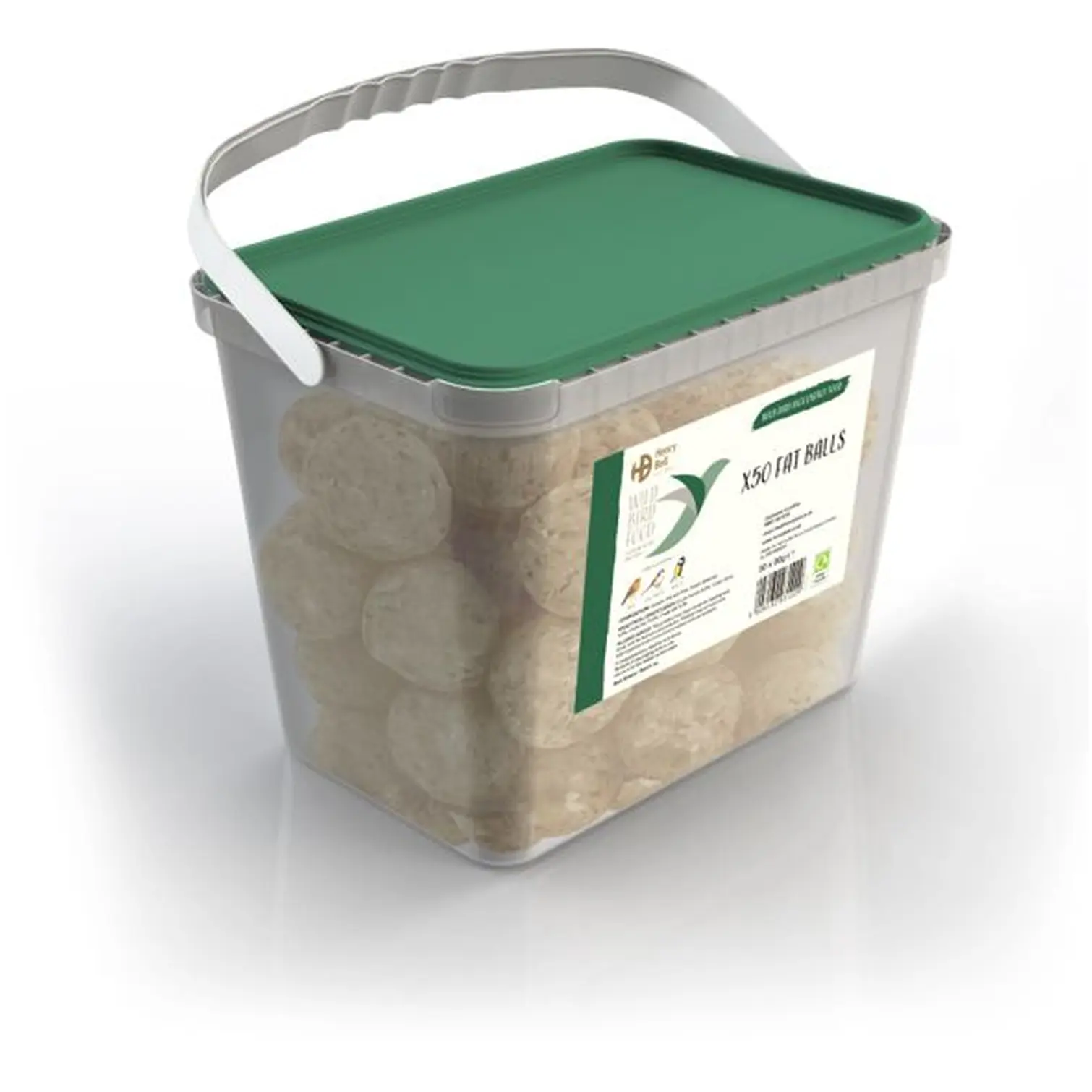
Fat is the most important food in cold weather. Henry Bell Fat Balls Tub of 50 is great value for regular feeders, with energy-rich fat, cereals and seeds that tits, starlings, sparrows and robins love. For variety, try suet cakes, a suet-filled coconut half or a suet pinecone hung from a branch.
Peanuts
Peanuts are high in fat and protein, and they’re loved by blue tits, great tits, nuthatches and great spotted woodpeckers. Only feed them from a mesh peanut feeder like the Henry Bell wire peanut feeder, so birds have to peck off small pieces. Never put out loose whole peanuts in spring and summer, as adult birds can feed them to their chicks, which can choke. Henry Bell Wild Bird Food Peanuts 1kg are whole peanuts, also in 2kg and 12.55kg bags.
Seed Mixes
A good seed mix attracts a wide variety of birds. Henry Bell Wild Bird Food Superior Seed Mix 1kg is made for smaller garden birds like house sparrows, dunnocks, bullfinches, blue tits, great tits and robins, and suits all types of feeders. If husks on the patio drive you mad, Henry Bell Wild Bird Food No Mess Mix 2kg is a blend of seeds, sunflower hearts and suet pellets with no husks left behind.
Food for Robins and Blackbirds
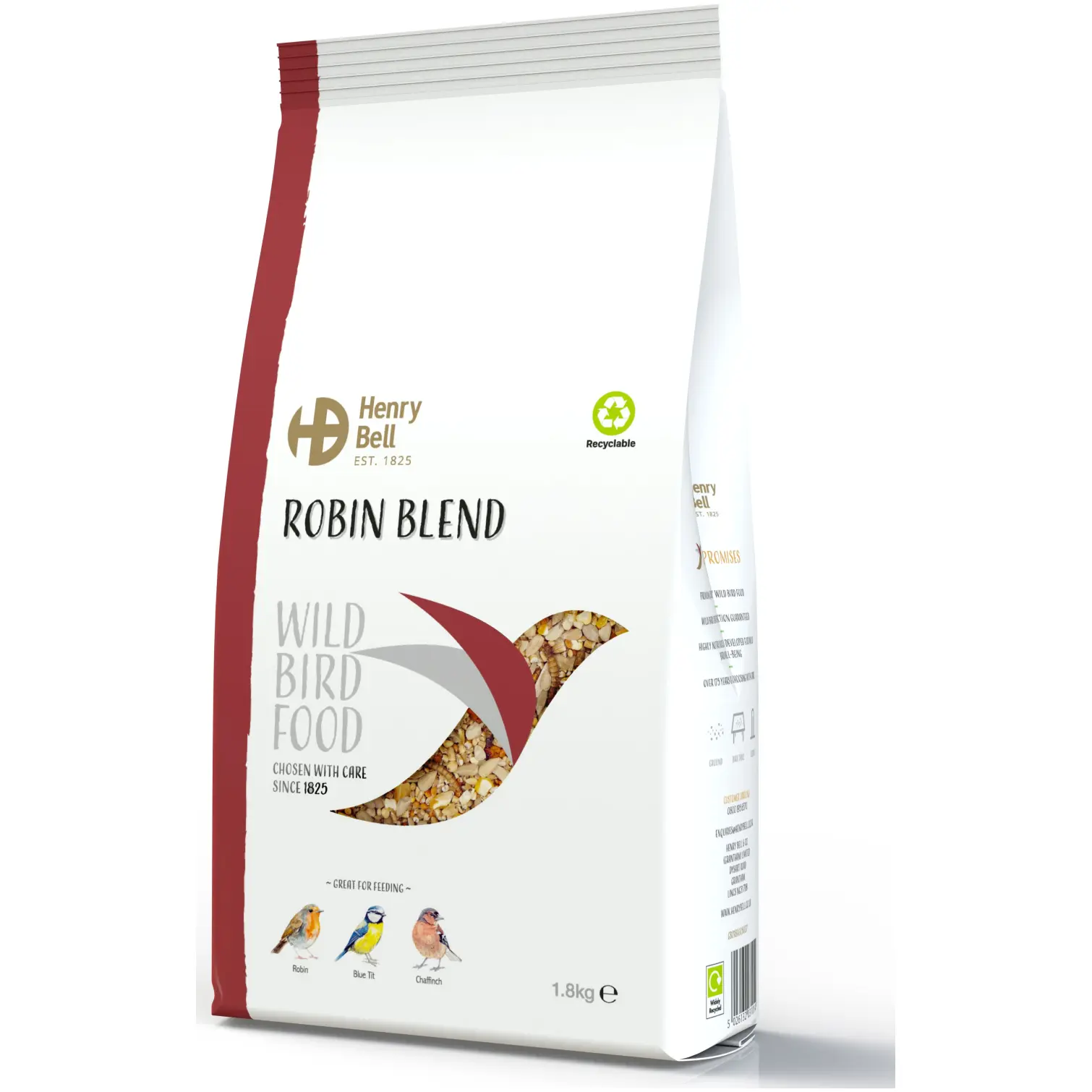
Robins and blackbirds prefer feeding on the ground or a flat table rather than hanging feeders. Henry Bell Wild Bird Food Robin Blend 1.8kg is packed with sunflower hearts and mealworms, robins’ favourites, and dried mealworms are a protein boost. Soak dried mealworms in a little water first in dry weather. A ground-level table like the Newark bird table keeps food off the wet grass.
Nyger Seed for Goldfinches
Goldfinches and siskins love tiny, oil-rich nyger seed. It needs a special nyger feeder with small ports, or it pours straight out. Henry Bell Wild Bird Food Nyger Seed 1.8kg is a 1.8kg bag.
What Not to Feed Birds
- Salty food, like salted peanuts, crisps or bacon fat. Salt is toxic to birds.
- Cooking fat from a roasting tin. It’s soft, smears onto feathers and stops them keeping birds warm and dry.
- Milk. Birds can’t digest it.
- Dry desiccated coconut, which can swell up inside a bird.
- Lots of bread. It fills birds up without giving them the energy they need in winter.
- Mouldy or stale food. Throw it away.
Choosing the Best Bird Feeders
Different feeders suit different foods. Most gardens do well with a seed feeder, a peanut feeder and a fat ball feeder.
- Seed feeders: the Henry Bell seed feeder has ring perches to make feeding easier and safer. For a bigger garden, try the large seed feeder.
- Peanut feeders: the wire peanut feeder has an easy-open lid and a removable base for cleaning.
- Fat ball feeders: the large fat ball feeder holds plenty, so you refill less often.
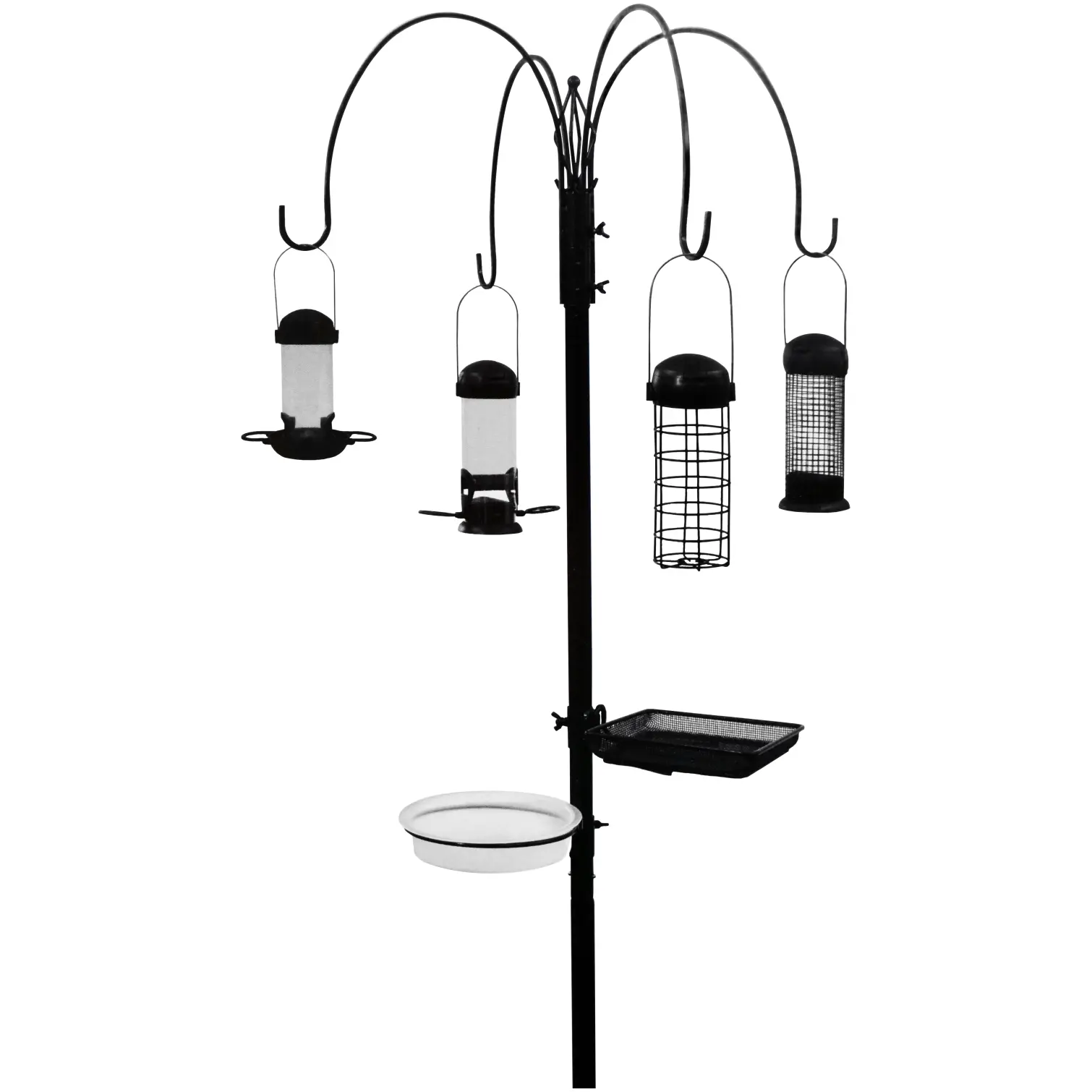
- Feeding stations: the Henry Bell four arm feeding station gives you four hanging arms for different foods, so you can feed lots of species in one place.
Heavy Duty Bird Feeding Stations
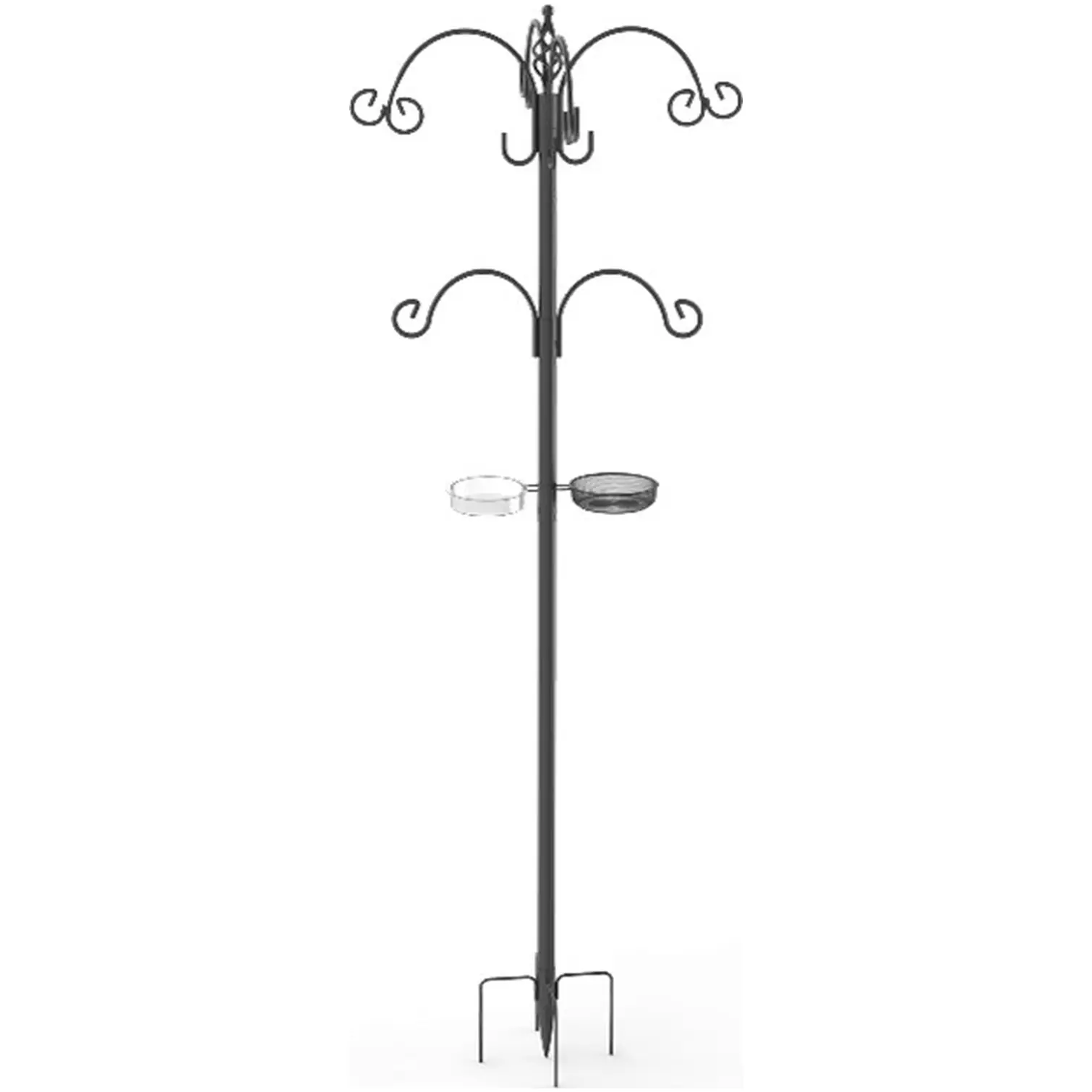
A feeding station lets you hang several feeders in one spot, so you can offer seed, peanuts, fat balls and water together and attract more species. In an exposed Scottish garden, sturdiness matters. The Henry Bell heavy duty bird feeding station is made from heavy-duty steel with a strong, stable base to stop it tipping, and has multiple hooks for different feeders. If your station rocks in the wind, a set of feeding station stabilisers (a four-prong base) or bird table ground pegs anchors it firmly into the lawn. For a smaller garden, the Henry Bell 2 arm feeding station is a neat starter.
Where to Put Bird Feeders
- Near cover, but not too near. Birds like a bush or tree nearby to dart into if a sparrowhawk appears, but feeders right next to dense cover let cats ambush them. A couple of metres away works well.
- Somewhere you can see them from a window. That’s half the fun.
- Away from windows’ reflections, or close enough (within about a metre) that birds can’t build up speed and hit the glass.
- Out of the wind where you can, on the sheltered side of the garden.
Squirrel-Proof Bird Feeders: Do They Work?
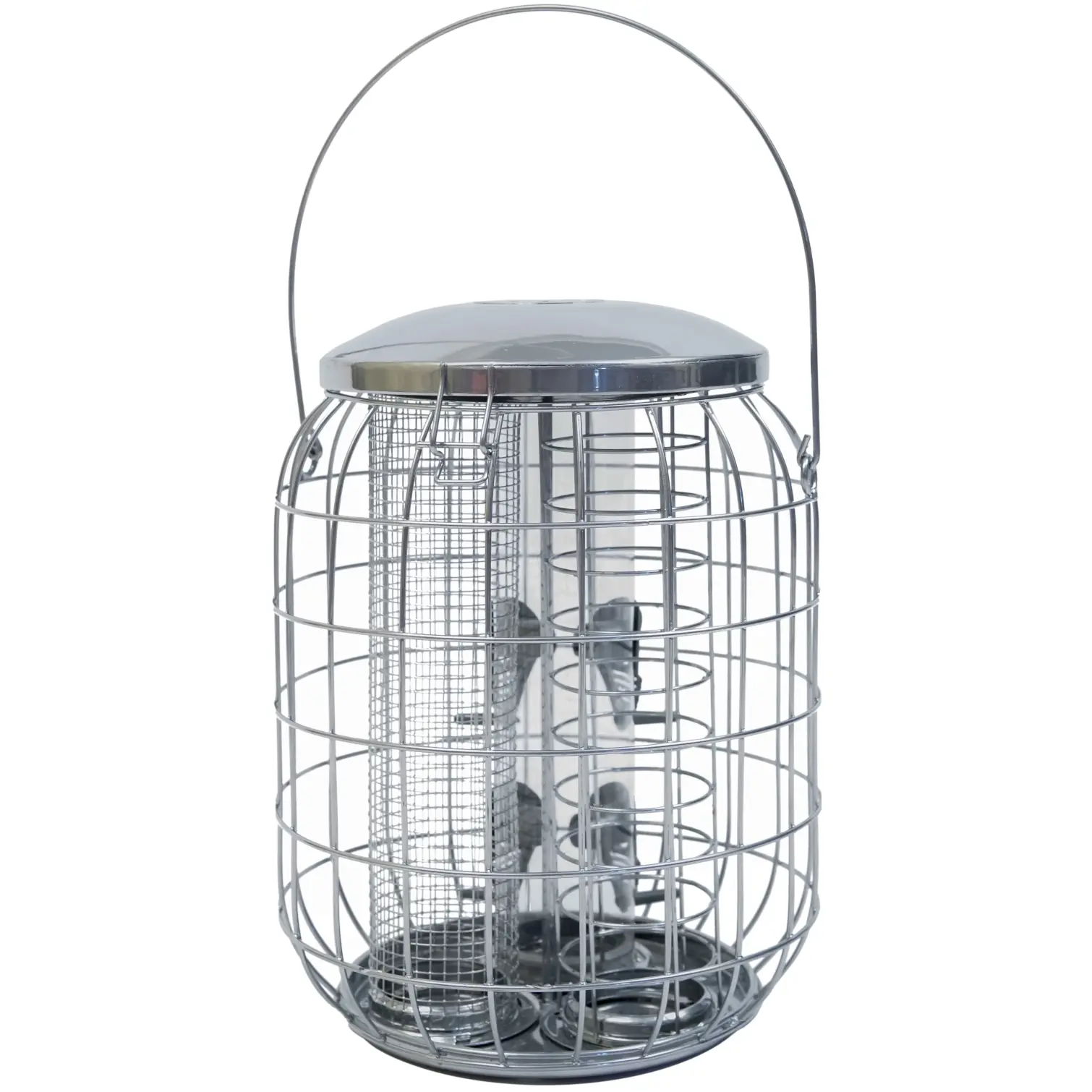
If squirrels are emptying your feeders in a day, a squirrel-proof feeder is the answer. The good ones work by putting a metal cage around the food, with gaps big enough for small birds to slip through but too small for squirrels (and for big birds like pigeons and magpies that hog the food).
- Best all-in-one: the Henry Bell 3 in 1 squirrel-proof feeder holds seeds, peanuts and fat balls in one unit, inside a robust metal cage, so finches, tits and robins can feed in peace.
- Best for seed: the Henry Bell Heritage squirrel-proof seed feeder is made from lightweight, corrosion-resistant aluminium to last outdoors, or there’s the Henry Bell squirrel-proof seed feeder at a lower price.
- Best for peanuts: the Henry Bell squirrel-proof peanut feeder.
Tips to Keep Squirrels Off Bird Feeders
- Position matters as much as the feeder. Squirrels are brilliant jumpers, so hang feeders well away from fences, walls, tree trunks and roofs they could leap from.
- Use a pole or feeding station out in the open rather than hanging feeders from a tree branch.
- Don’t scatter food on the ground under feeders. It brings squirrels in.
- Remember fat balls and suet too. Squirrels love them, so put them in a caged feeder.
In parts of Scotland, especially the Highlands, Argyll and Dumfries & Galloway, the squirrel at your feeder may be a native red squirrel rather than a grey. Plenty of people are delighted to see them, and choose to feed them rather than keep them out.
Water: Just as Important as Food
Birds need water every day to drink and to bathe, which keeps their feathers in good condition for staying warm. In a freeze, natural water disappears. A simple Henry Bell water drinker or a shallow dish works well.
- Refresh it daily, and give it a scrub regularly.
- In frost, pour on warm (not boiling) water to melt the ice, or float a small ball on the surface to stop it freezing over.
- Never add salt or antifreeze to stop it freezing. Both are dangerous to birds.
Keep Feeders Clean to Stop Disease
Busy feeders can spread diseases between birds, including trichomonosis, which has hit greenfinch and chaffinch numbers hard. Simple hygiene makes a big difference.
- Clean feeders every week or two with hot soapy water, rinse well and let them dry before refilling.
- Move feeders around the garden now and then, so droppings and spilled food don’t build up underneath.
- Only put out what birds eat in a day or two, so food stays fresh.
- Wear gloves and wash your hands afterwards.
- If you see sick birds (fluffed up, lethargic, struggling to swallow), stop feeding for a couple of weeks to let them disperse.
Shelter: Nest Boxes and Roosting Pouches
Autumn and winter are a great time to put up a nest box. Birds use them to roost on cold nights, and they’ll be in place and weathered by the time birds start prospecting for nest sites in early spring.
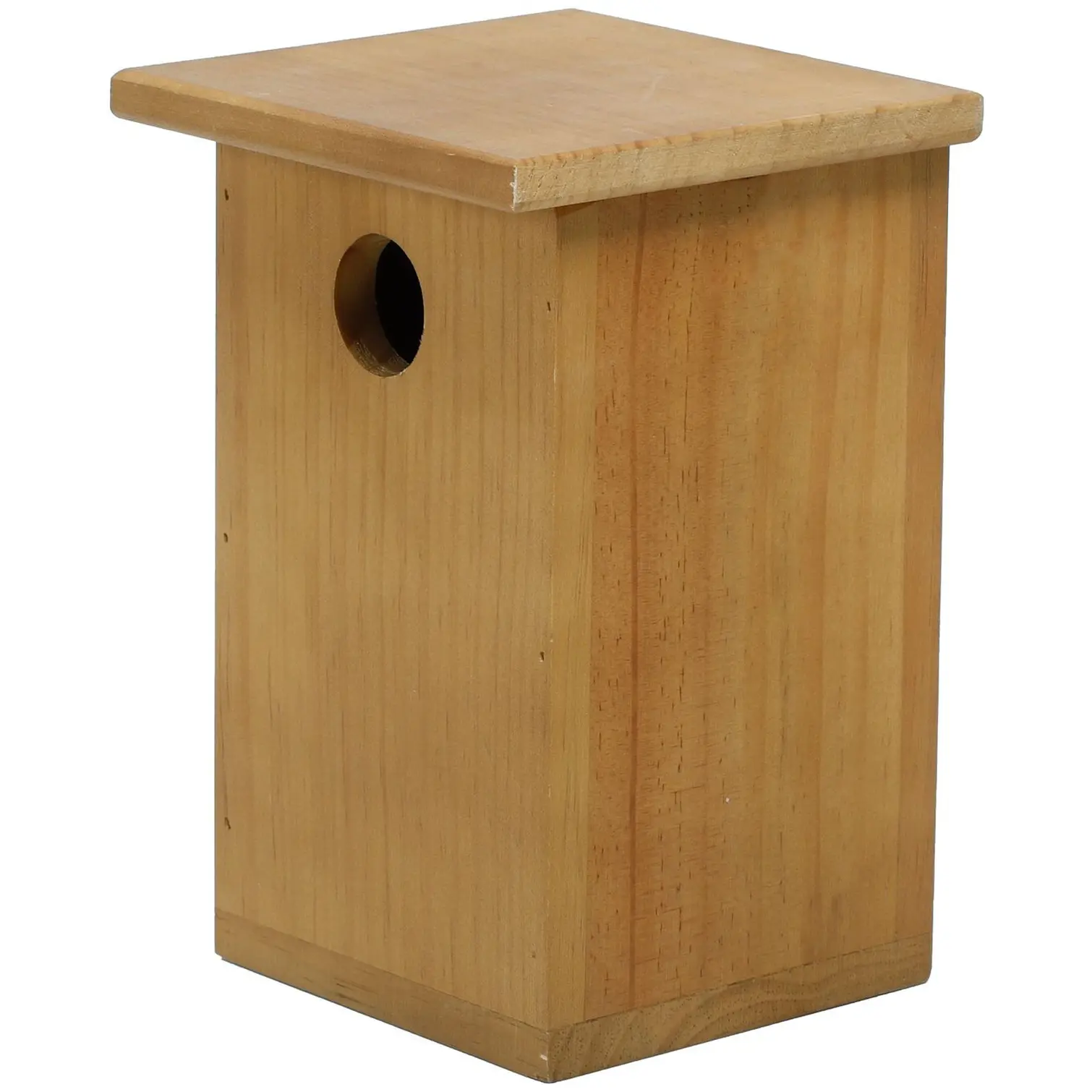
- The Henry Bell nest box is made from FSC timber with a 32mm entry hole, which suits a wide variety of small birds.
- Fix it 2 to 4 metres up a tree or wall, facing somewhere between north and east, so it avoids strong sun and the worst of the wind and rain.
- A Peckish roosting pouch is a naturally woven shelter that small birds can tuck into on cold nights. Hang it in a shrub or hedge.
Where to Buy Bird Food Near You
You can buy everything in this guide online for home delivery, or order online and collect from your local Home Hardware store. Many of our stores also carry a full bird care range on the shelf, so you can just pop in. Stock changes daily: on any product page, choose your store to see live stock before you travel. Find your nearest store using our store locator.
Bird Food in Ayrshire & Arran
From the Clyde coast at Largs down to Girvan and over to Arran, coastal gardens get plenty of finches, tits and sparrows, and robins and blackbirds are regulars at ground level.
- Saltcoats: full bird care range, with around 69 bird food and feeder lines in stock.
- Largs: full bird care range, with around 68 bird food and feeder lines in stock.
- Troon: full bird care range, with around 64 bird food and feeder lines in stock.
- Prestwick: full bird care range, with around 69 bird food and feeder lines in stock.
- Girvan: full bird care range, with around 69 bird food and feeder lines in stock.
- Cumnock: full bird care range, with around 52 bird food and feeder lines in stock.
- Isle of Arran: a selected range of bird food and feeders.
- Ayr: please call ahead to check bird care stock.
- Maybole: please call ahead to check bird care stock.
Bird Food in Glasgow & Renfrewshire
City and suburban gardens are some of the best places to feed birds in winter, with tits, finches, robins and house sparrows all relying on garden food when it’s cold.
- Bridge of Weir: full bird care range, with around 67 bird food and feeder lines in stock.
- Barrhead: a selected range of bird food and feeders.
- Glasgow: a selected range of bird food and feeders.
- Glasgow: please call ahead to check bird care stock.
Bird Food in Argyll, Bute & the Clyde Coast
Gardens near woodland on the Cowal peninsula, Bute and around Helensburgh often see coal tits, siskins and, near mature trees, great spotted woodpeckers on peanut feeders.
- Dunoon: full bird care range, with around 70 bird food and feeder lines in stock.
- Rothesay: full bird care range, with around 50 bird food and feeder lines in stock.
- Helensburgh: full bird care range, with around 70 bird food and feeder lines in stock.
Bird Food in Dumfries & Galloway
With farmland and woodland all around, Galloway gardens can attract a wide mix of finches, tits and thrushes, especially when hard weather pushes birds in from the countryside.
- Stranraer: full bird care range, with around 59 bird food and feeder lines in stock.
- Newton Stewart: full bird care range, with around 68 bird food and feeder lines in stock.
- Castle Douglas: full bird care range, with around 52 bird food and feeder lines in stock.
Bird Food in Edinburgh & the Lothians
From Morningside to the East Lothian coast, gardens attract goldfinches, blue tits and great tits, with redwings and fieldfares sometimes arriving for berries in cold snaps.
- Haddington: a selected range of bird food and feeders.
- Edinburgh: a selected range of bird food and feeders.
- Tranent: please call ahead to check bird care stock.
- North Berwick: please call ahead to check bird care stock.
Bird Food in Scottish Borders
Border gardens near woodland and rivers get a wide range of visitors, and a well-stocked feeder makes a real difference through a long, cold Borders winter.
- Hawick: full bird care range, with around 68 bird food and feeder lines in stock.
Bird Food in Moray & the Highlands
Highland winters are long and hard, so garden food matters. Near the Caledonian pinewoods of Speyside, crested tits and red squirrels can visit gardens too.
- Forres: full bird care range, with around 70 bird food and feeder lines in stock.
- Aviemore: please call ahead to check bird care stock.
- Fort Augustus: please call ahead to check bird care stock.
- Golspie: please call ahead to check bird care stock.
Bird Food in Forth Valley & Lanarkshire
Gardens in the Forth Valley and Clydesdale see all the familiar winter visitors, from robins and blackbirds to tits and finches.
- Falkirk: please call ahead to check bird care stock.
- Alloa: please call ahead to check bird care stock.
- Lanark: please call ahead to check bird care stock.
Bird Food in Northumberland & Tyneside
From the coast at Whitley Bay to Alnwick, gardens get tits, finches, starlings and sparrows, plus winter thrushes when the weather turns.
- Whitley Bay: a selected range of bird food and feeders.
- Alnwick: please call ahead to check bird care stock.
Common Winter Bird Feeding Mistakes
- Stopping suddenly in a cold snap. Birds come to rely on your garden, so keep it going.
- Leaving fat balls in nets. Always remove the mesh.
- Dirty feeders. Clean them regularly.
- Forgetting water, especially in a freeze.
- Feeders where cats can hide.
- Kitchen scraps that are salty, greasy or mouldy.
Our Recommendation
- Starter kit: a seed feeder, Henry Bell Wild Bird Food Sunflower Hearts 1kg and a fat ball feeder with Henry Bell Fat Balls Tub of 50.
- For the most species: the four arm feeding station with seed, peanuts and fat balls.
- Squirrel problems: Henry Bell 3in1 Squirrel Proof Feeder.
- Exposed, windy garden: the heavy duty feeding station with stabilisers.
- For robins: Henry Bell Wild Bird Food Robin Blend 1.8kg on a ground table.
- Don’t forget: a water drinker and a nest box.
Frequently Asked Questions
What is the best bird food for winter?
High-energy foods are best in winter: sunflower hearts, fat balls and suet, and peanuts in a mesh feeder. Sunflower hearts are the best all-round choice as almost every garden bird eats them and they leave no husks.
Where can I buy bird food near me?
Home Hardware stores across Scotland and the North East of England stock bird food, feeders and nest boxes, with full ranges in towns including Saltcoats, Largs, Prestwick, Troon, Girvan, Dunoon, Helensburgh, Bridge of Weir, Stranraer, Newton Stewart, Hawick and Forres. You can check live store stock online and order for Click & Collect.
Should I feed birds all winter?
Yes. Once you start, try to keep feeding regularly through the winter, as birds come to rely on garden food, especially in frost and snow. Feed little and often so food stays fresh.
Is it OK to put fat balls out in nets?
No. Always remove fat balls from mesh nets before putting them out, as birds can trap their feet or tongues in the netting. Use a proper fat ball feeder instead.
How often should I clean my bird feeder?
Every week or two. Wash feeders in hot soapy water, rinse and dry them before refilling, and move them around the garden occasionally to stop droppings building up.
When should I put up a nest box?
Autumn and winter are ideal. Birds use nest boxes to roost on cold nights, and the box will be in place before birds start looking for nest sites in early spring. Face it between north and east, 2 to 4 metres up.
Do squirrel proof bird feeders work?
Yes, caged squirrel-proof feeders work well when they’re positioned properly. The metal cage lets small birds reach the food while keeping squirrels and large birds out. Hang them well away from fences, trees and roofs that squirrels can jump from.
What is the best heavy duty bird feeding station?
Look for a heavy-duty steel station with a wide, stable base and several hooks, so it won’t tip over in wind and you can hang different feeders. In exposed gardens, add stabilisers or ground pegs to anchor it.
How do I stop my bird bath freezing?
Pour on warm, not boiling, water to melt the ice, or float a small ball on the surface. Never use salt or antifreeze, which are harmful to birds.
Related Reading
Shop Bird Food and Feeders
Browse more: Bird Food & Feeders. Order online for home delivery or Click & Collect from your nearest Home Hardware store.